The people who grow it
should profit from it.
Raíz connects corporate sustainability investment directly to community-identified projects in smallholder coffee and cacao farming communities — with radical transparency and university-verified impact.
Community-led. Rigorously verified.
Radically transparent.
One organization. One flywheel. The entity that helps farmers improve is the same one that certifies and funds those improvements — with independent, university-affiliated verification for credibility.
Communities identify priorities
Raíz doesn't prescribe solutions. Farming communities and their local partners identify what they need — whether that's processing infrastructure, soil rehabilitation, market access, or technical training. We listen first, then fund.
We embed expertise on the ground
Raíz works with local agronomists, university researchers, extension agents, and community scientists who already have deep relationships in the regions we serve. Our team brings evidence-based approaches — soil and leaf sampling, farmer interviews, context-specific recommendations — not outside prescriptions.
Improvement generates data
Every farm interaction produces data — soil samples, GPS-mapped boundaries, canopy photographs, practice records. Combined with satellite remote sensing, this creates a continuous picture of regeneration that no annual audit can match.
Your investment flows to producers
Corporate partners fund specific, community-defined projects. A minimum of 60% of all revenue returns directly to farming communities. Every dollar is tracked, every impact is published on our public ledger.
This work is already underway.
Five pillars of regeneration
Carbon is one piece. We measure holistic regeneration — because a farm that sequesters carbon but destroys biodiversity isn't regenerative.
Soil Health
Organic matter, microbial biomass, aggregate stability — measured annually, tracked continuously
Carbon
Soil organic carbon + above-ground biomass, quantified with published methodology and satellite verification
Biodiversity
Shade tree diversity, pollinator habitat, ground cover — quarterly transects and photo monitoring
Water
Infiltration rates, erosion control, riparian buffers — protecting watersheds farm by farm
Community
Income growth, knowledge transfer, cooperative health, gender inclusion — because regeneration is human too
Community-identified.
Transparently funded.
Every project below was identified by the farming communities and local partners we work with. Your investment goes directly to the priorities they've defined — not what we decided they need from a distance.
Yepocapa Specialty Processing Facility
San Pedro Yepocapa, GuatemalaA specialty coffee processing facility in Guatemala's Antigua region — including post-harvest processing focused on quality, a cupping lab for farmer feedback, and a roastery tied to local training and education. This facility would serve hundreds of smallholder producers, opening the region to specialty markets and creating an alternative pathway beyond the middlemen who currently pay well below market rate.
The need: Post-harvest infrastructure is the critical bottleneck. Existing wet mills optimize for volume, not quality. Farmers can't access specialty prices without specialty processing.
Developed in collaboration with Dr. Taya Brown (Texas A&M) and Devon Barker, who have worked in this community for over seven years.
Laos Smallholder Coffee & Agroforestry Program
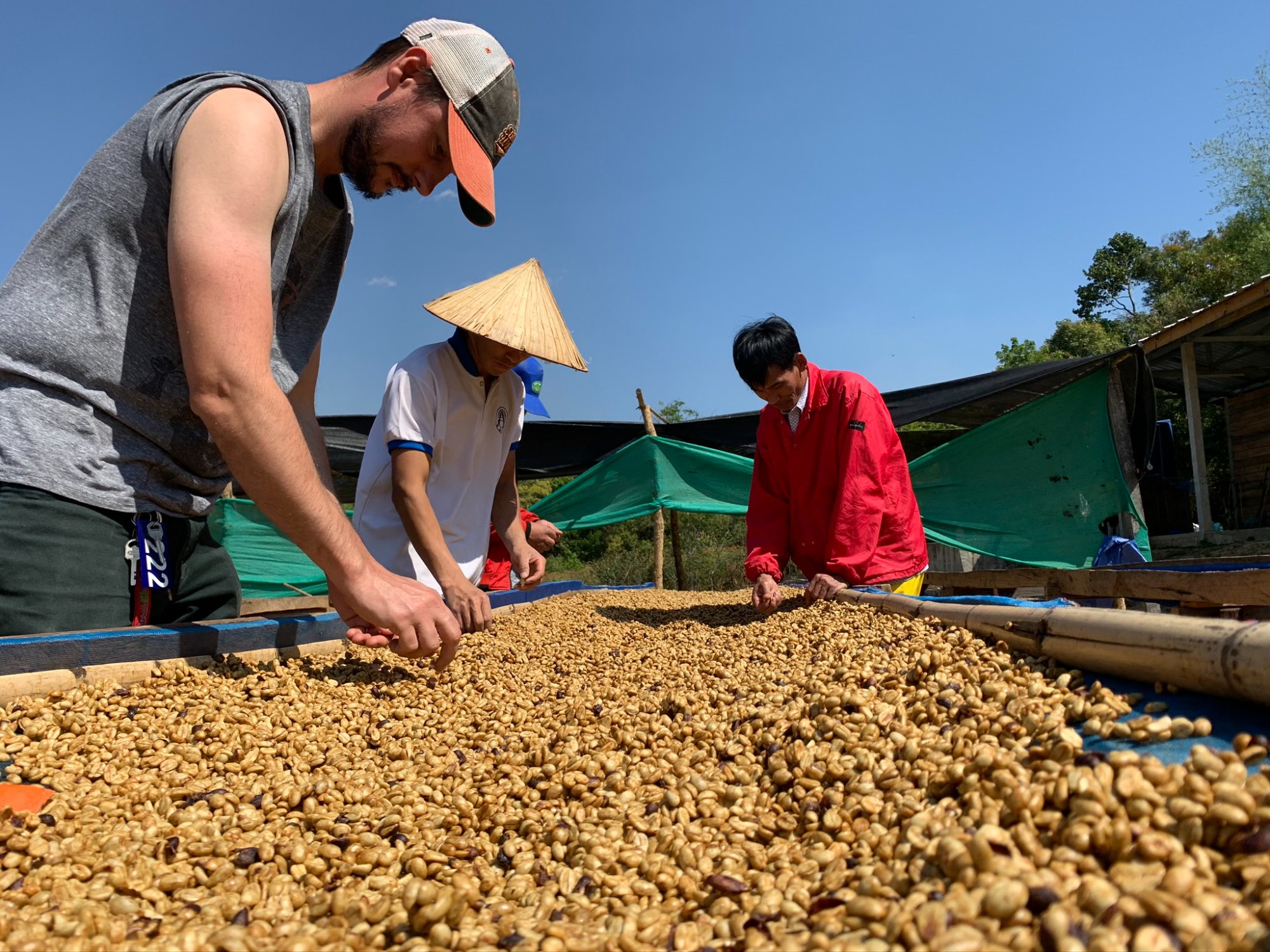
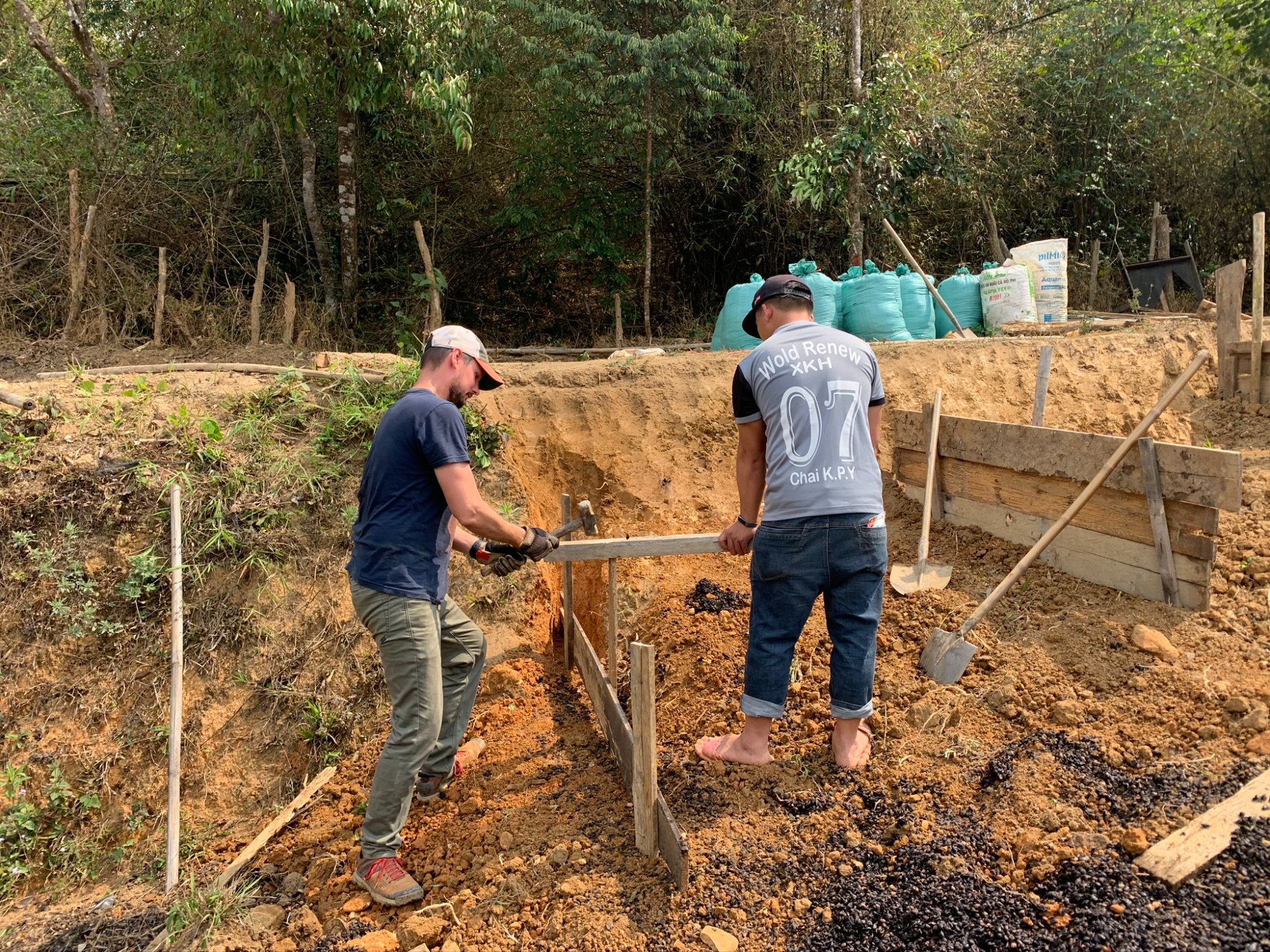
Lao PDRExtension support and regenerative practice development for a smallholder coffee cooperative in Laos. Focus on shade canopy optimization, composting systems, soil health improvement, and connecting producers to specialty export markets where Lao-origin coffee commands premium prices.
The need: Farmers lack technical support for regenerative transitions and have limited access to markets that reward quality. Extension services are sparse in rural Lao coffee regions.
Building on Raíz founder Joshua Spitaleri's prior fieldwork establishing composting programs and conducting agricultural extension with Lao farming communities.
Guatemala Coffee Cooperative — Regenerative Transition
GuatemalaSupporting an established coffee cooperative through the transition to verified regenerative practices. Includes baseline soil sampling, individualized farm plans, shade tree diversification, and building the data infrastructure needed for certification and carbon quantification.
The need: Cooperatives have the farmer relationships but lack resources for soil science, data collection, and the technical guidance needed to access regenerative and carbon markets.
Working directly with cooperative leadership to ensure all priorities are community-defined.
General Fund
Not sure which project to support? Contribute to our general fund and we'll allocate your investment across active projects based on the greatest community need.
Every dollar tracked.
Every claim verified.
Public Data Ledger
All farm-level data, soil samples, satellite imagery, and credit issuance published openly. Anyone can audit our claims.
University Verification
Independent ground-truthing by university-affiliated researchers. Their reputation depends on rigor, not our revenue.
Published Methodology
Our carbon quantification methodology is open for peer review. We improve it publicly, not behind closed doors.
Revenue Transparency
Every partnership's revenue flow is published: what came in, what went to farmers, what funded operations. No black boxes.
Carbon Credits — Coming Soon
Our pilot farms in Guatemala and Laos are establishing baselines now. Forward commitments for verified carbon credits will be available to partnership-tier sponsors first.
Pilot Credits Expected Q4 2026Built by people who've
done the work.
Raíz isn't built on theory. It's built on years of fieldwork, research, and direct relationships with the farming communities we serve.
Joshua Spitaleri
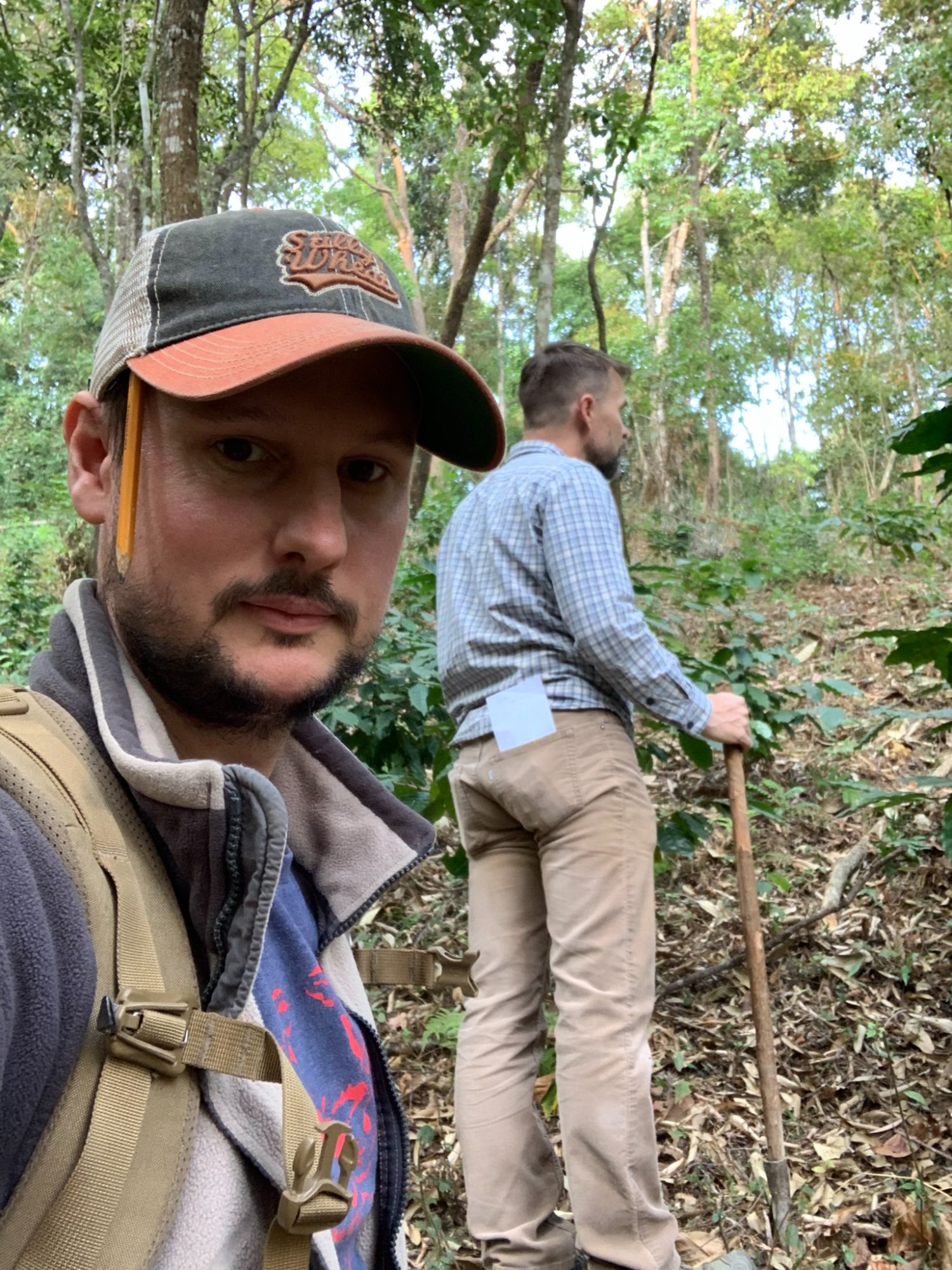
FounderJosh brings an unusual combination of agricultural development experience and enterprise technology architecture to Raíz. He holds a Master's in International Agriculture from Oklahoma State University, where his research focused on smallholder coffee production economics in Laos. His fieldwork includes direct agricultural extension with coffee farming communities in both Laos and Guatemala — conducting site analysis, establishing composting and regenerative practice programs, and evaluating value chains for smallholder producers.
Josh founded Out There Coffee Co., sourcing directly from smallholder farmers and roasting and selling through a direct-to-consumer model. His Lao-origin coffee became the company's most popular product — an early proof of concept that smallholder-sourced, origin-story-driven specialty coffee commands real market demand.
Before Raíz, Josh spent over a decade in enterprise systems architecture and cybersecurity engineering, designing identity management and cloud infrastructure for organizations including Biogen, Carfax, and Oklahoma State University. This dual background — boots-on-the-ground agricultural development paired with enterprise-grade technology design — is what enables Raíz to operate as a tech platform rather than a traditional NGO.
Dr. Adam Cobb
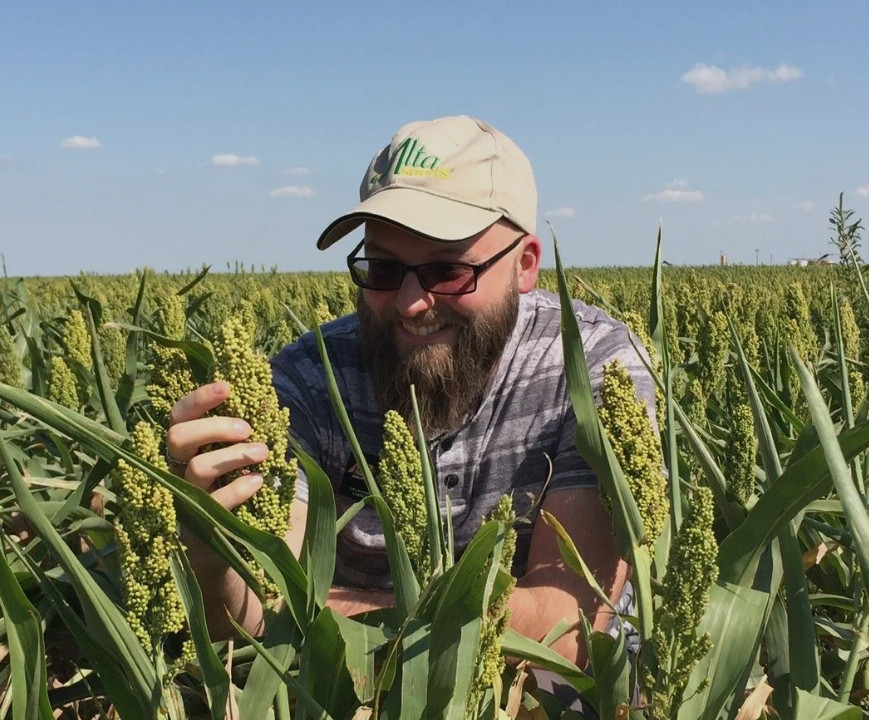
Chief Science OfficerDr. Cobb brings deep scientific expertise in soil ecology, mycorrhizal biology, and regenerative land management to Raíz. He holds a PhD in Natural Resource Ecology and Management from Oklahoma State University, where he served as a postdoctoral research fellow and graduate faculty member for over a decade. His research has produced more than 20 peer-reviewed publications and secured approximately $330,000 in competitive grants, including a USDA NIFA-AFRI Postdoctoral Fellowship.
Adam's work extends well beyond the lab. He currently consults with international organizations including the African Cotton Foundation, Aid by Trade Foundation, and Cotton Made in Africa — deploying climate-smart and regenerative practices in smallholder agricultural communities across the Global South. He has presented on soil biology and regenerative agriculture at venues ranging from COP28 to regional farming cooperatives.
As founder of Holobiont Hub, Adam has built a global community around open-access soil science education and regenerative practice. His combination of rigorous research credentials, field experience in developing-world agriculture, and commitment to accessible science communication makes him the ideal architect of Raíz's verification methodology and certification standard.
Additional team members and local extension leads in Guatemala and Laos will be announced as pilot operations begin.